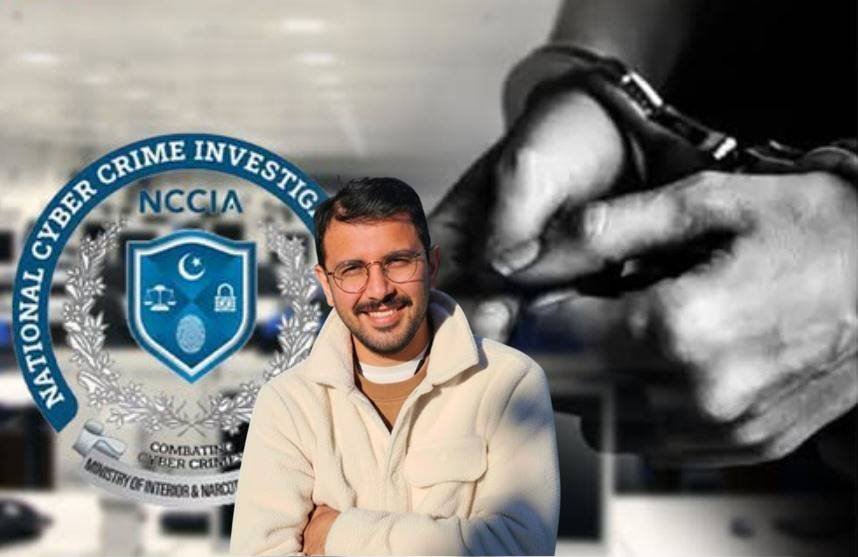
Missing Canadian PhD Student Found in NCCIA Custody, Remanded to Jail Over Social Media Case
A Canadian PhD student who went missing from DHA Phase 10 last week has been found in the custody of the National Cyber Crime Investigation Agency (NCCIA) and has been sent to jail on a 14-day judicial remand in connection with an alleged cybercrime case.
According to police records, Hamza Ahmad Khan, a Canadian national, disappeared in the early hours of February 19 from his residence in Lahore. A friend later approached the Defence-A police station, reporting that Hamza had been kidnapped. Police subsequently registered a First Information Report (FIR).
Lahore Police officials stated that they were unaware of Hamza’s whereabouts until he was produced before a magistrate after his arrest by the NCCIA.
Allegations Linked to Social Media Activity
In a statement, the NCCIA said the case relates to Hamza’s alleged social media activity on X and Instagram, where he is accused of sharing content critical of state institutions and officials.
According to the FIR registered under the Prevention of Electronic Crimes Act (PECA), the posts were allegedly intended to spread hostility, create unrest, and damage Pakistan’s national image. Investigators claimed the content could defame political and constitutional officeholders and undermine public confidence in state institutions.
The cybercrime agency said such online activity posed a serious risk to social order and national interests, prompting legal action.
Judicial Remand Granted
Hamza Ahmad Khan was presented before a magistrate on Monday, who approved a 14-day judicial remand. He has since been shifted to jail, while the NCCIA continues to investigate his digital footprint and online activity.
Questions Raised Over Evidence
Despite the agency’s claims, questions have emerged regarding the evidence cited in the case. While the NCCIA maintains that the arrest is based on posts made on X and Instagram, no independently verifiable screenshots or public records of the alleged content have been released so far.
Observers note that if such posts did exist, they may have been deleted or removed before the case became public. The absence of visible evidence has fueled debate on social media and among journalists, with calls for greater transparency and clearer documentation to establish the basis of the charges.
The case has drawn attention to issues surrounding digital expression, enforcement of cyber laws, and due process, as investigations continue under Pakistan’s cybercrime framework.